bird migration and moth blog
22nd november 2009.
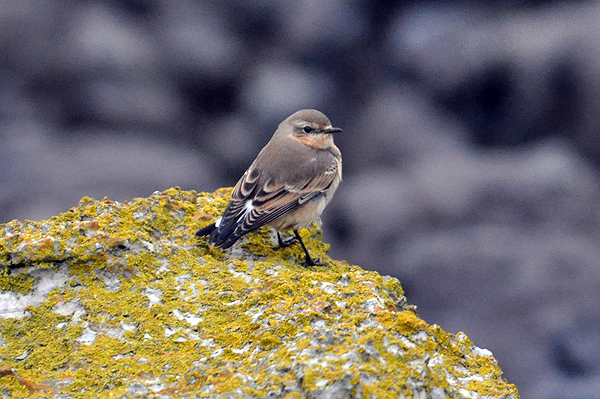
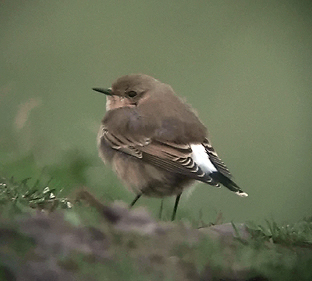 13mph Southerly wind. Cloudy with showers and the odd sunny spell, 999mB, 9 degrees. A Northern Wheatear present between half way along the point. Comparing the photos it may be a different bird to the one up to the 17th. I initially thought this bird may have been a Desert Wheatear after seeing a similar bird on Netfugl but it appears this bird was a Northern Wheatear as the photos are no longer online. Plumage wise this bird is not pale enough and doesn't give the impression of anything other than Northern Wheatear when first seen. Also, I wouldn't expect to see Desert Wheatear on Sand Point. Sand Bay would be a more suitable habitat. Still, this is without doubt the latest Wheatear I have ever had. The latest county record is 29th November 1998.
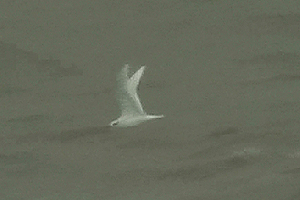 The winds swung south-westerly and reaching 21mph this afternoon so I spent just over an hour off Anchor Head which produced 110 common gull, 71 kittiwake, 4 curlew and an adult winter mediterranean gull all moving down channel into at one stage a hail storm. The med gull looked completely white and at first I thought it was a tern. This video still is taken with a 30xWW eyepiece and the subject is over 1/4 mile away. Not the best place to be photographing. Unfortunately there is no access to the old pier where photographing would be much easier.
21st november 2009.
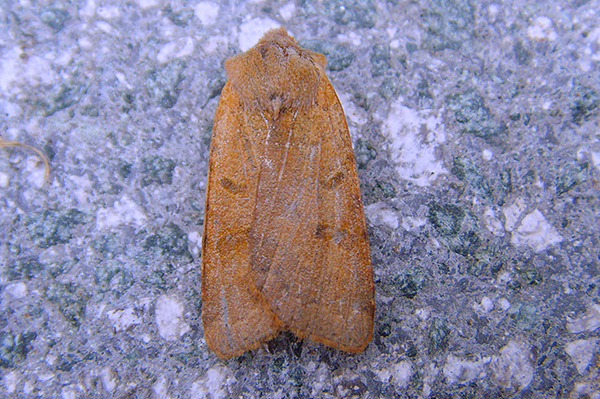
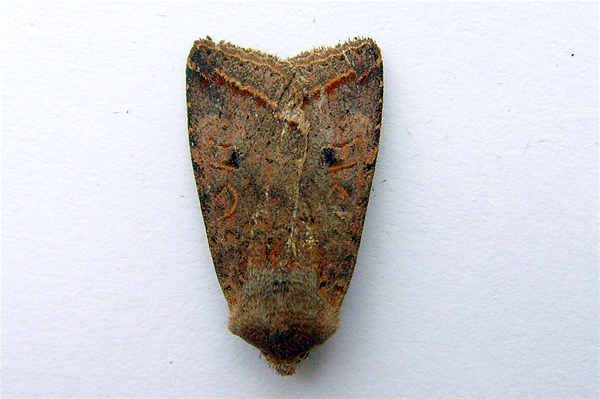
Over slept this morning so gave birding a miss today. The moth trap did however provide something to talk about with a Red-line Quaker giving me a year tick addition. Also in the trap were Cypress Carpet and what was probably yesterdays Silver Y. The rain setting in this afternoon meant the quaker had to be photographed indoors and with a list of DIY chores I wasn't about to experiment with different types of lighting.
20th november 2009.
Sunny, 13mph SW wind, 14 degrees, 1009mB. A large band of rain went through during the early hours of the morning which had passed shortly after first light leaving a bright sunny day with a drop in wind speed. I attempted to intercept some sea birds moving down channel again but was not successful this time. My late arrival may have contributed to the cause. Between 9:45 and 10:20 a small passage down channel was noted: 26 woodpigeon, 50 black-headed gulls, 20 common gulls, 1 siskin, 10 goldfinch, 7 greenfinch, 70 starling, 27 shelduck, 2 chaffinch, 1 reed bunting, 15 herring gull and 5 meadow pipits. Moving upchannel were 2 cormorants.
In the Netherlands, Good numbers of Starling and Chaffinch still on the move and of note a good passage of Great Crested Grebes with 500 south past one site.
In the moth trap a SilverY was the only moth.
19th november 2009.
Overcast with 22mph SSW wind. 1008mB. With all the sea birds recorded yesterday I felt compelled to spend some time looking at the sea. In fact it was almost mediocre when an Auk sp. shot past just before 9am and around 7 kittiwakes beat their way back down channel around the same time. Around 30 common gulls, 10 black-headed gulls and a great black-back gull fed over the choppy waters to the south of birnbeck pier.
18th november 2009. pigeon clocked flying 48mph
Overcast with 24mph south-west wind. 1008mB. I went to weston sewage works this morning expecting some gull passage. Passage was evident the short time I was there: 150 black-headed gulls, 10 common gulls, 50 herring gulls. Also heading south were: 12 redwing, 6 fieldfare, 17 jackdaw, 8 chaffinch, 4 greenfinch, 3 goldfinch, 10 starling, 30 woodpigeon. Surprise of the day however, was a feral pigeon flying alongside the car for 1/2 mile down the A370. I was travelling at 48mph. The bird clearly had no problem flying into a 45 degree headwind. Presumably birds are able to fly at these speeds in headwinds but the drag produced would limit the time that this could be maintained.
17th november 2009
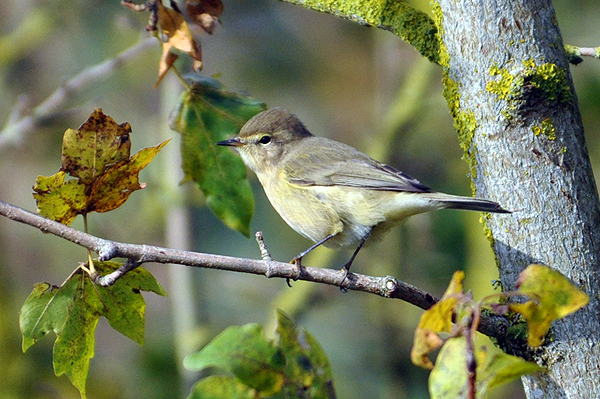
A bright sunny day 10 degrees, 12mph south-westerly, 1007mB. At sand point the Wheatear is still at the point and showing well on the rocks. Todays visible migration down channel included: 161 woodpigeon, 215 chaffinch, 9 shelduck, 30 black-headed gull, 10 common gull, 5 herring gull, 10 meadow pipit, 4 jackdaw, 50 starling, 1 brambling, 8 greenfinch, 3 goldfinch and linnet. A chiffchaff showed well in the car park.
At weston sewage works: 500 woodpigeon, 10 stock dove, 1,000 starling, 150 fieldfare, 100 linnet feeding in the stubble fields.
Durlston NNR, Dorset had an incredible two hours this morning with 21,000 woodpigeon and 243 stock dove. Otherwise, it's been quiet nationally and in neighbouring countries. Successive lows heading east over the top of the UK are prodcuing westerly winds over the country which looks set to continue for a few more days.
15th november 2009
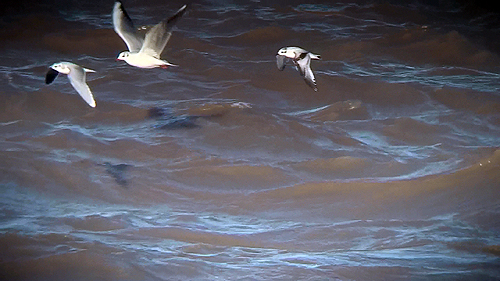
The weekend has been windy to say the least. On 14th it was mainly southerly with gusts of up to 48mph, it did swing more westerly mid afternoon which is when a few sea birds turned up in the Severn estuary. 3 Little Auks at Severn Beach plus Sabine's Gull and Leach's Petrel at Slimbridge. I don't think that any of these birds would have been seen past sand point as they most likely would have gone up the welsh side. I did decide to have a go at intercepting any that came out the channel this morning. Today the winds were 12mph SSW which is enough of a drop to see anything coming out. Vis mig down channel past the point included 44 kittiwake, 200 black-headed gulls, 50 common gulls, 30 herring gulls, 200 starling, 100 chaffinch, 1 redshank, 4 linnet, 5 goldfinch, 2 greenfinch, 2 siskin, 1 redpoll, 1 brambling, 5 bullfinch together, 50 woodpigeon, 4 shelduck, 5 lesser black-back gulls, 3 skylark, 15 meadow pipit. Upchannel were 6 little gulls (3 adults, 3 juvs) that fed briefly at the point amongst black-headed gulls. The wheatear was still present at the point for its 7th day.
In the moth trap: beaded chestnut, blair's shoulder knot, cypress carpet, 5 light brown apple moth.
12th november 2009
Clear sky at dawn but soon became cloudy with Altocumulus castellanus. A 10mph southerly wind present. Indeed the influx of monday and tuesday had gone through quickly leaving wednesday rather sparse. Yesterdays report of the Wheatear still at Sand Point tempted me out to see if it was present this morning and sure enough it was. A small amount of vis mig counted in 45 mins included: 139 chaffinch, 480 starling, 16 woodpigeon, 8 greenfinch, 12 goldfinch, 10 fieldfare, 3 redwing, 2 siskin, 10 meadow pipit, 4 linnet.
11th november 2009
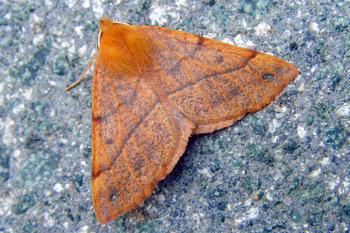 Suspecting a drop in migrants today I only ventured as far as Ashcombe Park this morning. I did however bump into a singing male Firecrest. I remember Gordon Rayner teaching me the song of a singing bird at Sand Point in the early eighties. Since then I have virtually never heard one singing until today. As far as I am aware Gordon has now hung up his bins and is living in Birmingham. News came on Birdguides of a Wheatear on Sand Point which possibly may be the bird from the 9th. The low pressure system has now moved east over the Netherlands. Tthe Notams Radar has picked up a lot of bird activity in the east of the Netherlands. In the moth trap the only moth was a Feathered Thorn. At this time of the year there are no confusion species.
10th november 2009
 Light easterly wind with nimbostratus and occasional light drizzle. Another good day, more new birds in. Best bird was a House Martin that spent 10 minutes hawking and calling over the car park. This is the second record of House Martin in november for me at sand point. The other spent several minutes around the point before heading off. A chiffchaff between the point and the fort was also a new migrant in. Ducks were on the move with 15 wigeon hanging around the point before drifting off with the tide. Vis mig included 1,400 starling, 26 goldfinch, 4 golden plover, 3 greenfinch, 15 meadow pipit, 14 redshank, 1 dunlin, 15 woodpigeon, 1 mistle thrush, 10 fieldfare, 5 redwing, 30 chaffinch, 1 brambling. 9 rock pipits were at the point. One of the meadow pipits lingering at the point caught an Angleshades.
At the Axe Estuary dunlin numbers upgain to 330, 40 ringed plover, 1 spotted redshank. At weston sewage works 150 fieldfare west, 5 redwing west and a steady stream of black-headed gulls west. All vis mig had stopped by 11:00.
9th november 2009
Weatherwise the day was grey with thick nimbostratus and a northerly wind varying in strength. The centre of a low over scotland extended to the rest of the uk bringing settled conditions. Air flows anti-clockwise around a low and then rises in the centre. This is a condition that birds may use and certainly there were more birds around than yesterday. Vis mig at sand point: 1,210 starling, 100 chaffinch, 1 brambling, 34 woodpigeon, 2 redpoll, 3 siskin, 45 fieldfare, 10 redwing, 16 meadow pipit, 2 reed bunting, 1 redshank, 1 golden plover, 2 goldfinch, 1 curlew, 4 goldfinch, 2 greenfinch, 2 rock pipit.
At the axe estuary 136 dunlin, 1 spotted redshank, 1 knot
8th november 2009
Strong northerly winds today. I went to Brean in the hope of bumping into some vis mig. Apart from a song thrush, 2 wrens and long-tailed tit heard there were no birds at all on the down. Moving north over the back were 150 starling and 4 brambling.
Whilst at Brean I had a call about the Yellow-browed Warbler at Apex so decided to take a look. Found by Andy Slade it took a lot of effort to keep track of and I went away only having heard it. 5 chiffchaff and a blackcap were also in the area and 200 fieldfare flew over high south.
James Packer and Brian Gibbs emailed me about a Wilson's Phalarope sighting on Weston beach this morning. Seen by 2 non-birders it then flew towards the Axe Estuary.
7th november 2009
7mph north-westerly and clear sky. Vis mig at Sand Point: 250 chaffinch, 255 starling, 5 greenfinch, 35 woodpigeon, 8 goldfinch, 1 brambling, 1 yellowhammer, 3 reed bunting, 25 meadow pipit, 1 siskin, 1 redwing, 1 fieldfare. 1 chiffchaff around the car park.
Moth trap: 1 blair's shoulder knot.
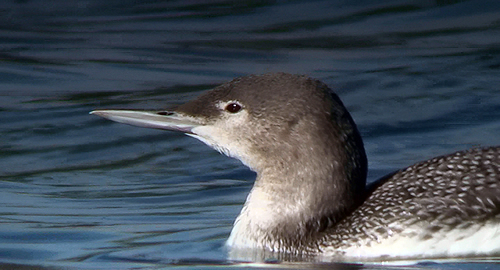
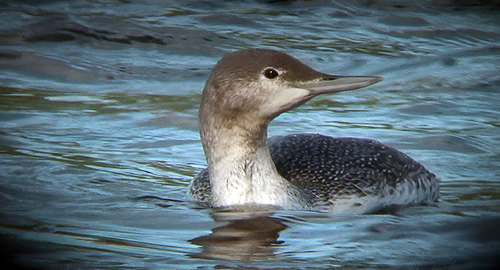
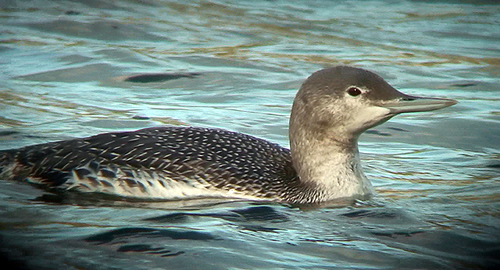
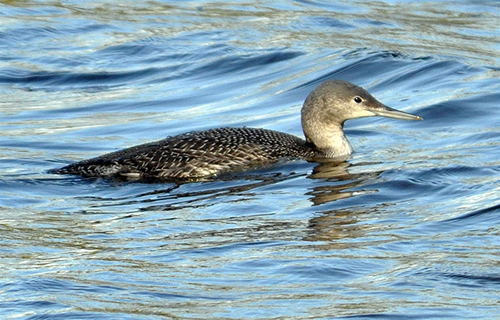
I visited Chard Reservoir for the first time this morning to photograph the Red-throated Diver. The bird didn't take long to locate and spent much of it's time along the north-east shore. The pictures below are a mixture of screen grabs and DSLR photos.
6th november 2009
A 7mph north-westerly wind with 95% cloud. At Sand Point so vis mig was evident with some birds very high up not visible to the naked eye. All bird heading west were: 44 woodpigeon, 295 starling, 420 chaffinch, 17 greenfinch, 3 goldfinch, 71 meadow pipit, 3 reed bunting and 4 rock pipit. 1 carrion crow flew north out to sea and 2 redwing flew east. A drake Goosander flew west past the point and a chiffchaff was in song by the car park.
The ringed Mute Swan on the river Axe on the 4th November was ringed at Abbotsbury Swannery as a one year old male in 2005.
Nationally there are still good numbers of Woodpigeon on the move with nearly 27,000 south over South Haven, Studland, Dorset. Further afield De Vulkaan Den Haag, Netherlands had 37,000 starling and 17,000 chaffinch flying south.
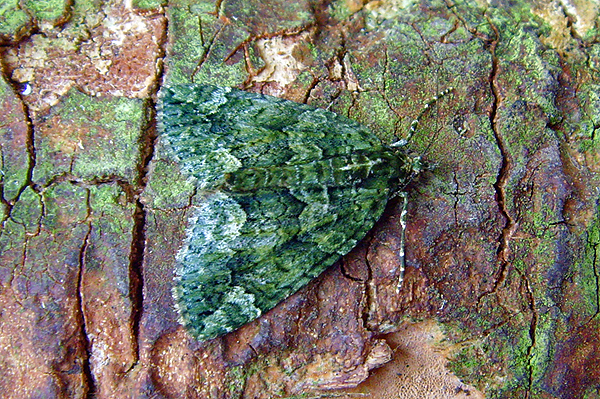
The Autumn Green Carpet has been re-identified as a Red-green Carpet based on tonal colour and the shape of the antemedial line not consistent with this species.
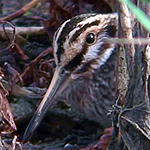 I have eventually got round to uploading a short video clip of the Jack Snipe at Chew Valley Lake. The bird displayed an unusual bobbing behaviour. Not having seen this species before perched it was quite an interesting thing to watch and rather comical. Perhaps the addition of a Black-eyed Peas track overlaid would have set the scene rather nicely. Unfortunately the Jack Snipe was always partially covered. Click on the photo for the clip.
5th november 2009
Walking the dog in Ashcombe Park at first light produced a vocal Firecrest by the tennis courts. There were also several Redwing about. A light passage of Redwing went through last night plus Blackbirds were also heard. I went back to photograph the Firecrest later but couldn't find it. 150 Woodpigeon went through heading south-west. 2+ Goldcrest were found along with 2 Mistle Thrush.
4th november 2009
Much the same weather as yesterday. At weston sewage works vis mig activity included 480 starling (heading north and west), 20 woodpigeon south, 140 black-headed gulls south, 90 lapwing north, 4 pied wagtail south, 1 chaffinch south, 1 greenfinch south, 4 meadow pipit south, 1 adult mediterranean gull east, 3 reed bunting south, 3 goldfinch south, 1 redwing east. A Mute Swan was present with a yellow ring on right leg with the letters YUH.
3rd november 2009
13mph south-westerly with intermittent showers. At Weston Sewage Works vis mig was rather slow although a flock of 300 woodpigeons perked things up a little. Otherwise moving west in a half hour count were 150 black-headed gulls, 3 skylark, 7 linnet, 12 meadow pipit, 4 goldfinch, 60 starling. 130 starling also went north. The green sandpiper was still on the axe and the female pintail still on the UV pools.
2nd november 2009
Another day of showers. I didn't go out this morning and missed out on the heavy Woodpigeon passage. The best count involved an impressive 15,000 went through Poole in Dorset this morning. Again movement was down both sides of the country. My suspicions are that these are in fact british birds on the move rather than passage migrants.
1st november 2009
A wet start to the day with stong south-westerly winds. At Weston STW 1,100 Black-headed Gulls moving west, 200 starling west, 2 golden plover west and a reed bunting west. A Green Sandpiper was at Brean Cross Sluice. Sea watching from Anchor Head produced a flock of 8 Common Scoter south in the first 10 mins but nothing else in the following hour.
Nationally migration wise the weather reduced much of the days passage although 1,100 Pink-footed Geese moved through Ferny Ness, East Lothian.
31st October 2009 chew jack snipe
My second attempt at filming Jack Snipe was more successful. The birds moved obscured amongst the phramites but I was happy to come away with something.
No birds of note could be found in searches around weston.
Moth trap: Large Wainscot.
An impressive influx of an estimated 100,000 Fieldfare near Kingussie, Strathspey.
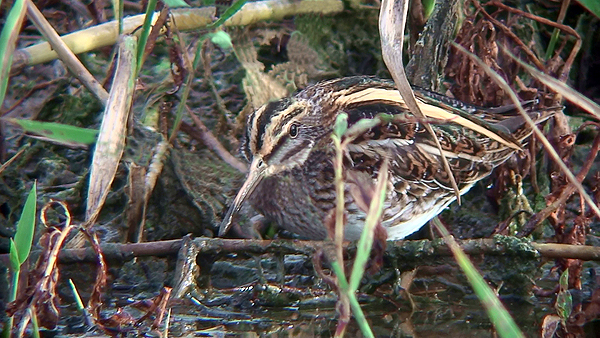
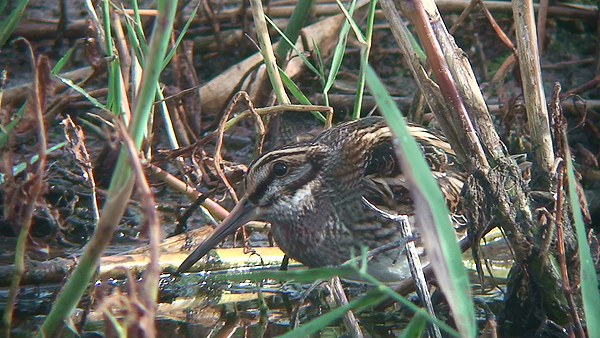
30th October 2009 chew jack snipe
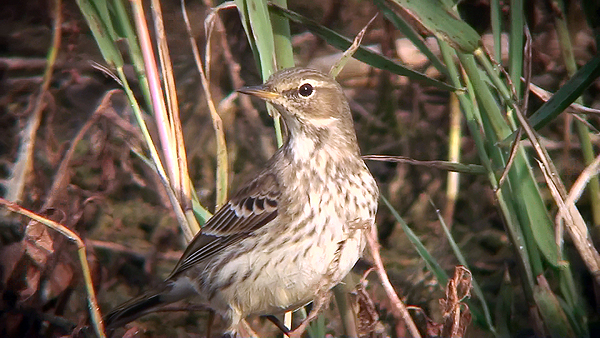
Having the day off I decided to go for the Jack Snipe at Chew today. A single bird was visible from Stratford hide but after 5 hours it moved about 4ft. The Water Pipits present associated with a Meadow Pipit flock that roved along the shoreline in front of Stratford.
Today huge numbers of migrants were picked up moving west over Germany, Netherlands and Belgium. During the day only big numbers of Woodpigeon were recorded moving south down both sides of the country.
In Weston only a Crossbill at Worlebury hill was worthy of note.
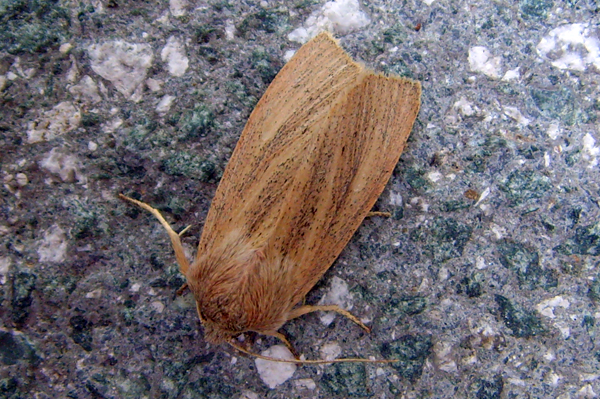
In the moth trap: Red-green Carpet, Shuttle-shaped Dart, Cypress Carpet, Beaded Chestnut.